Result
Role•E, lost in space
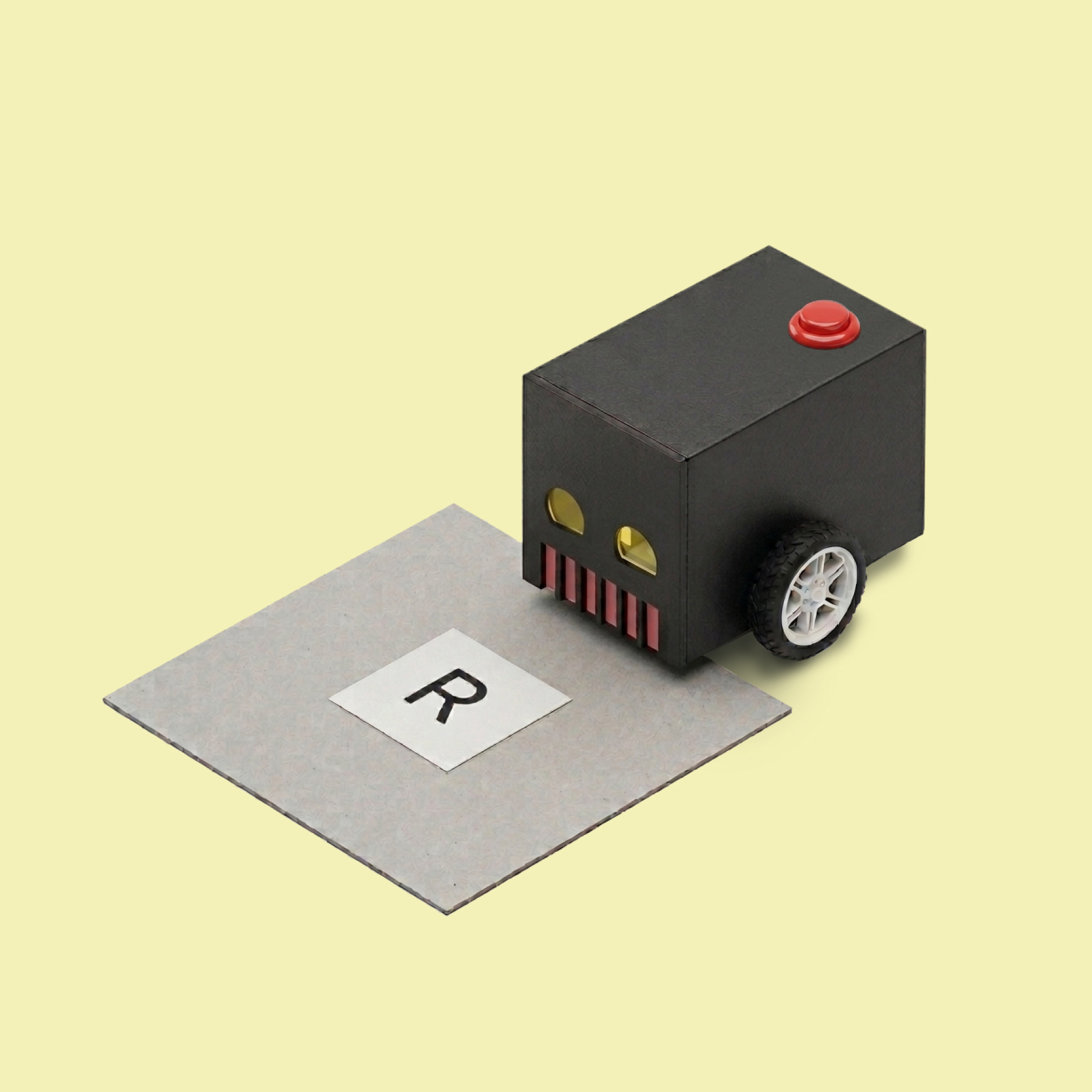
By laying out the direction cards, children big and small are introduced to the basic principle of programming.
In the video, the user controls a learning robot indirectly via freely placeable floor plates.
- DirectionsRoll•E moves in a fixed 90 degree grid. Users place the cards on the ground, Rolle•E adjusts its direction of travel as soon as it moves over them.
- Mission HomeHelp Rolle•E get home safely and correct misdirections caused by virus maps or oil puddles.
- RewardAt the finish you celebrate together with a little dance of joy.
Initial situation
Project goals
A preliminary project as at example of "Physical Computing". A candy bar is touched and begins to speak. The conductive packaging film serves as a sensor, detects changes in capacity and triggers voice output via Arduino.
In the video, a chocolate bar is touched and then begins to speak.
Ideation
Considered sketches
They help to make initial mental ambiguities visible and to identify gaps in the interaction.
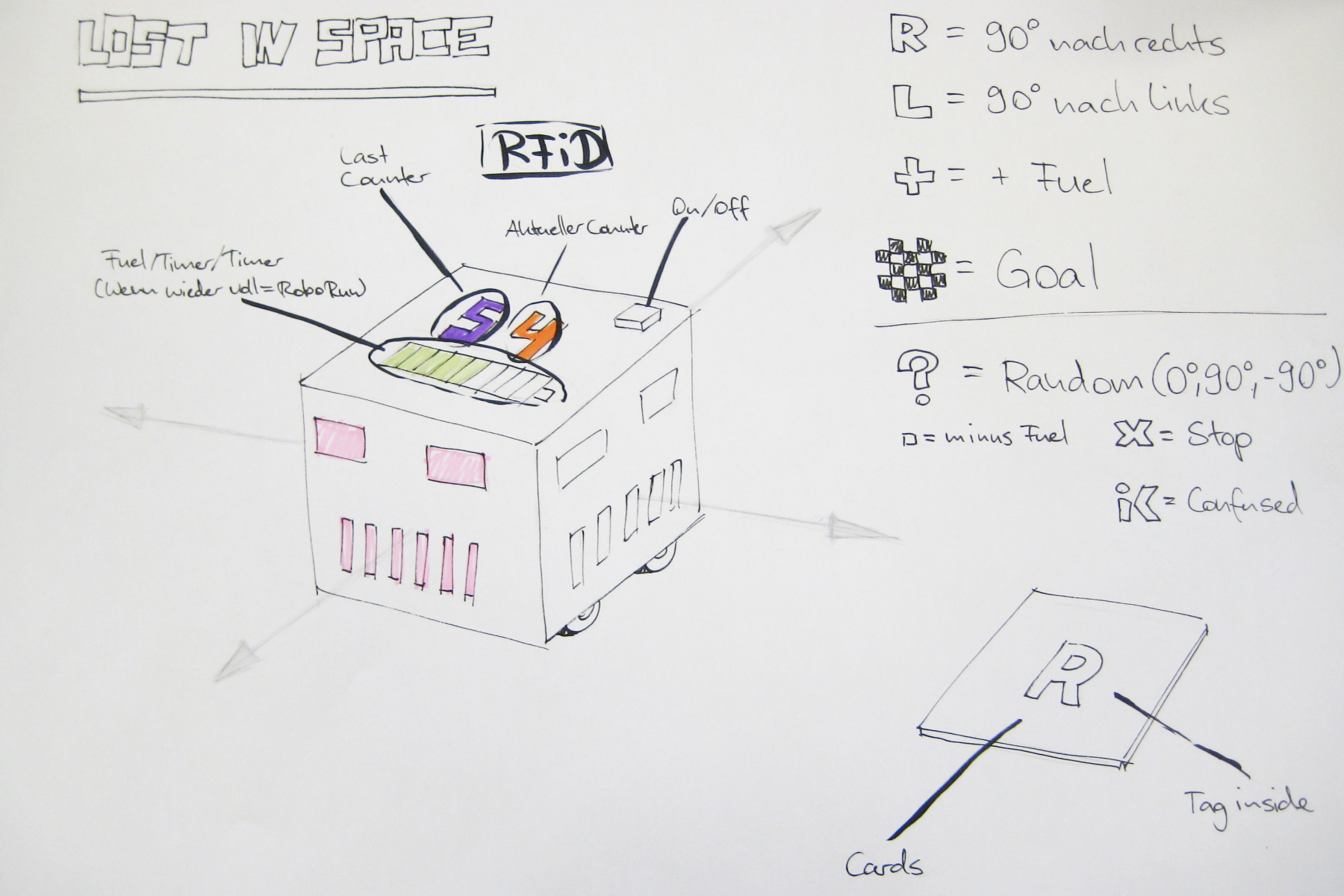
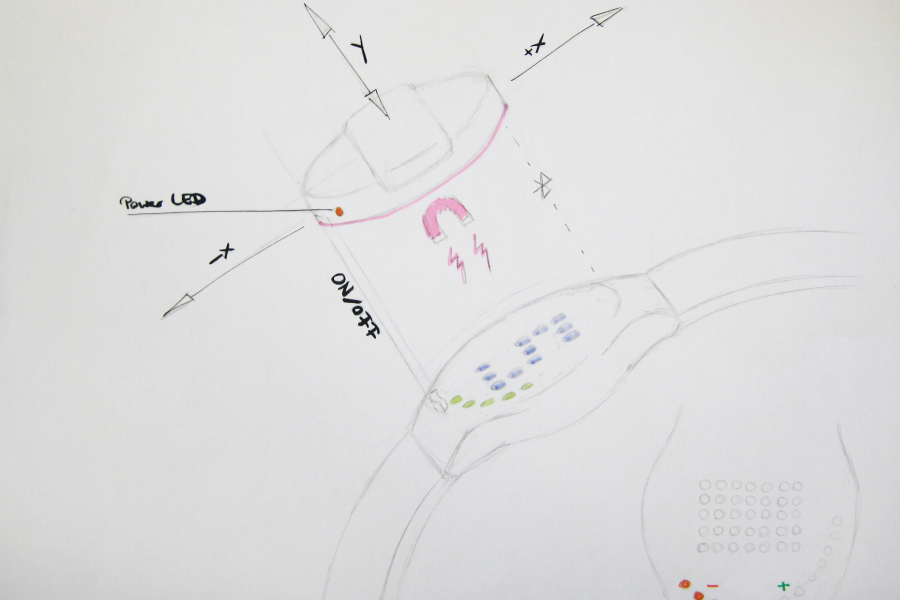
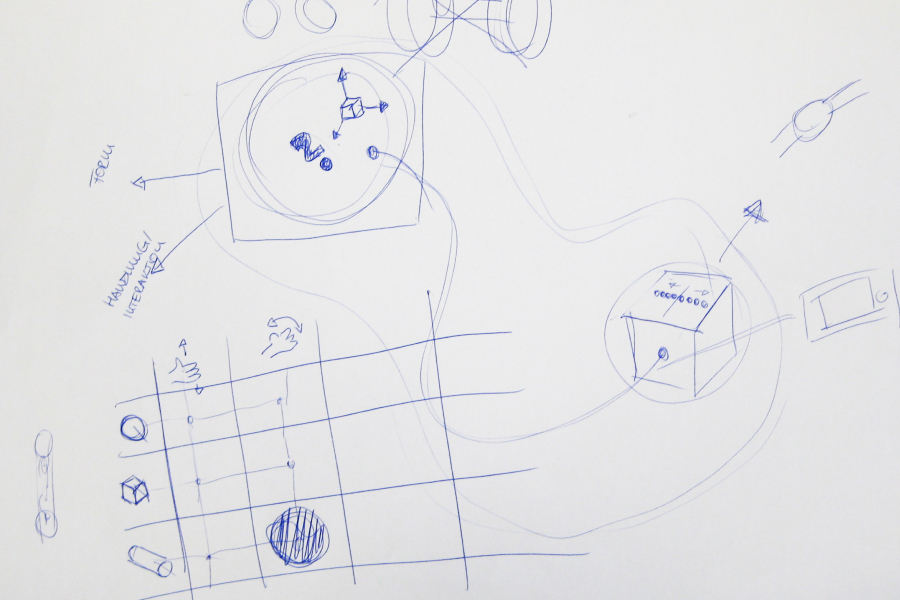
Concept choice “Lost in Space”
Can be implemented in a timely manner and allows creative and unplanned user behavior.
Playtesting
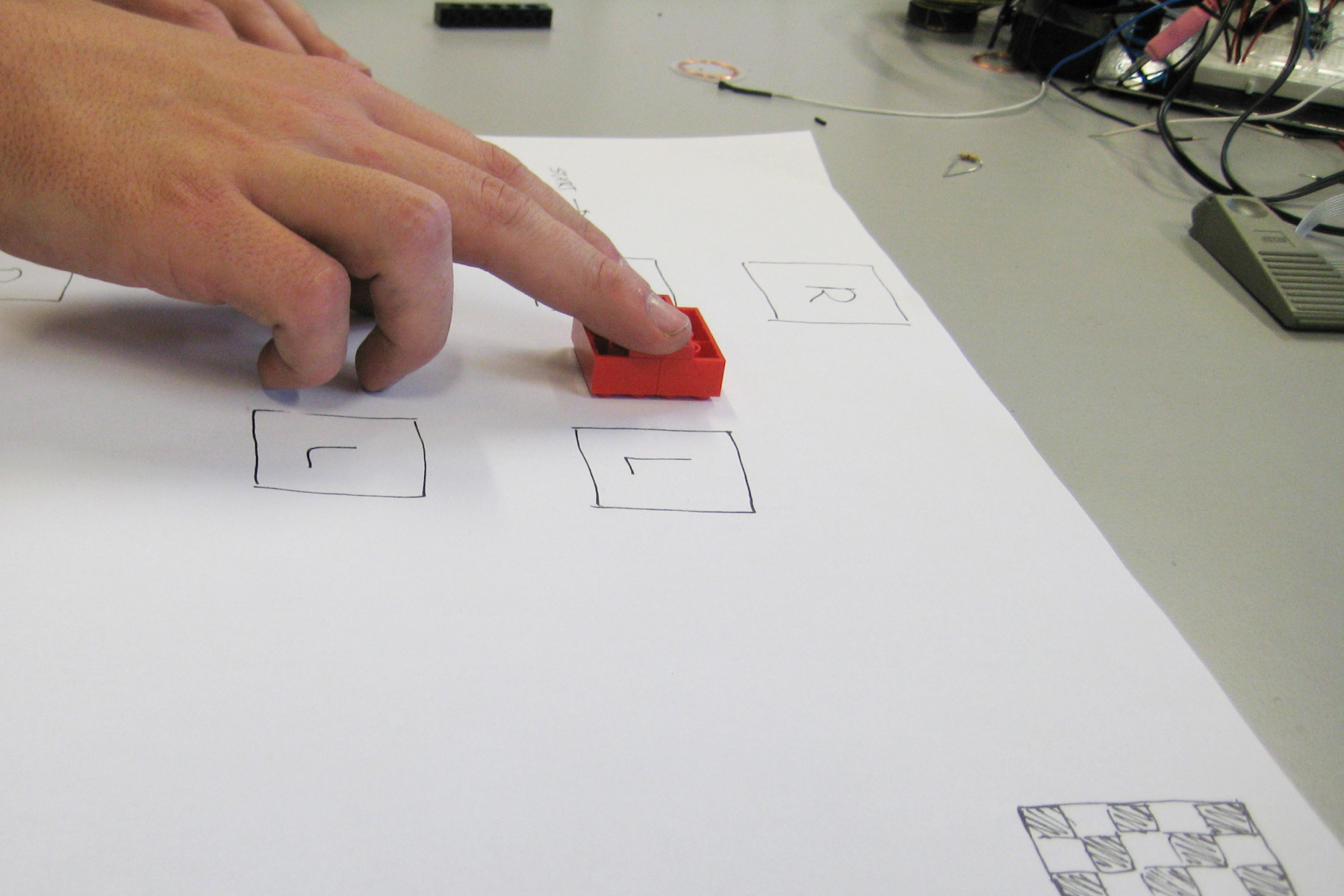
Initial tests with paper prototypes show that users understand the game principle intuitively and the concept is well received.
Build robots
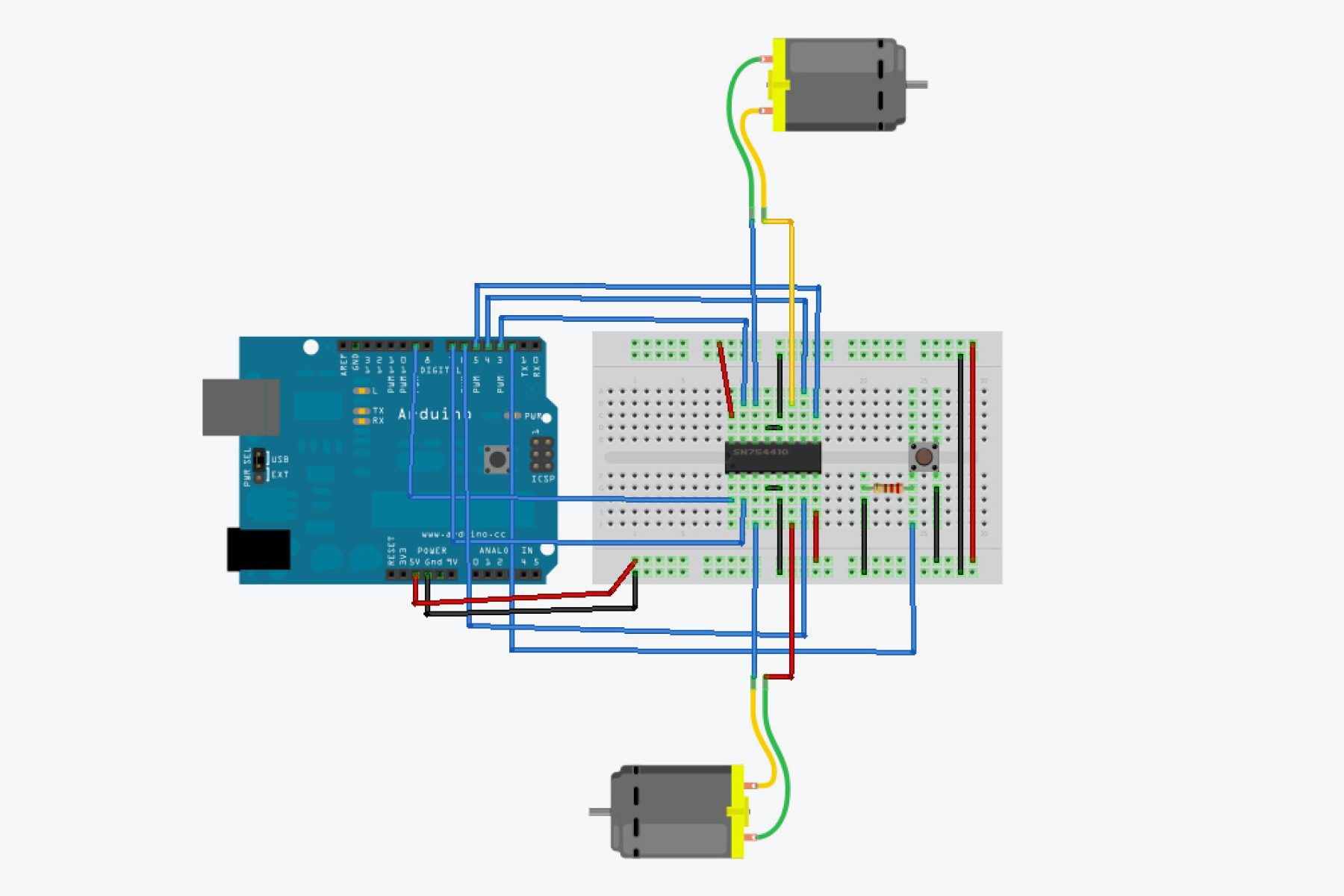
Draw electronics schematic
Shows, among other things, which electronic components are required for the control.
Development of the chassis
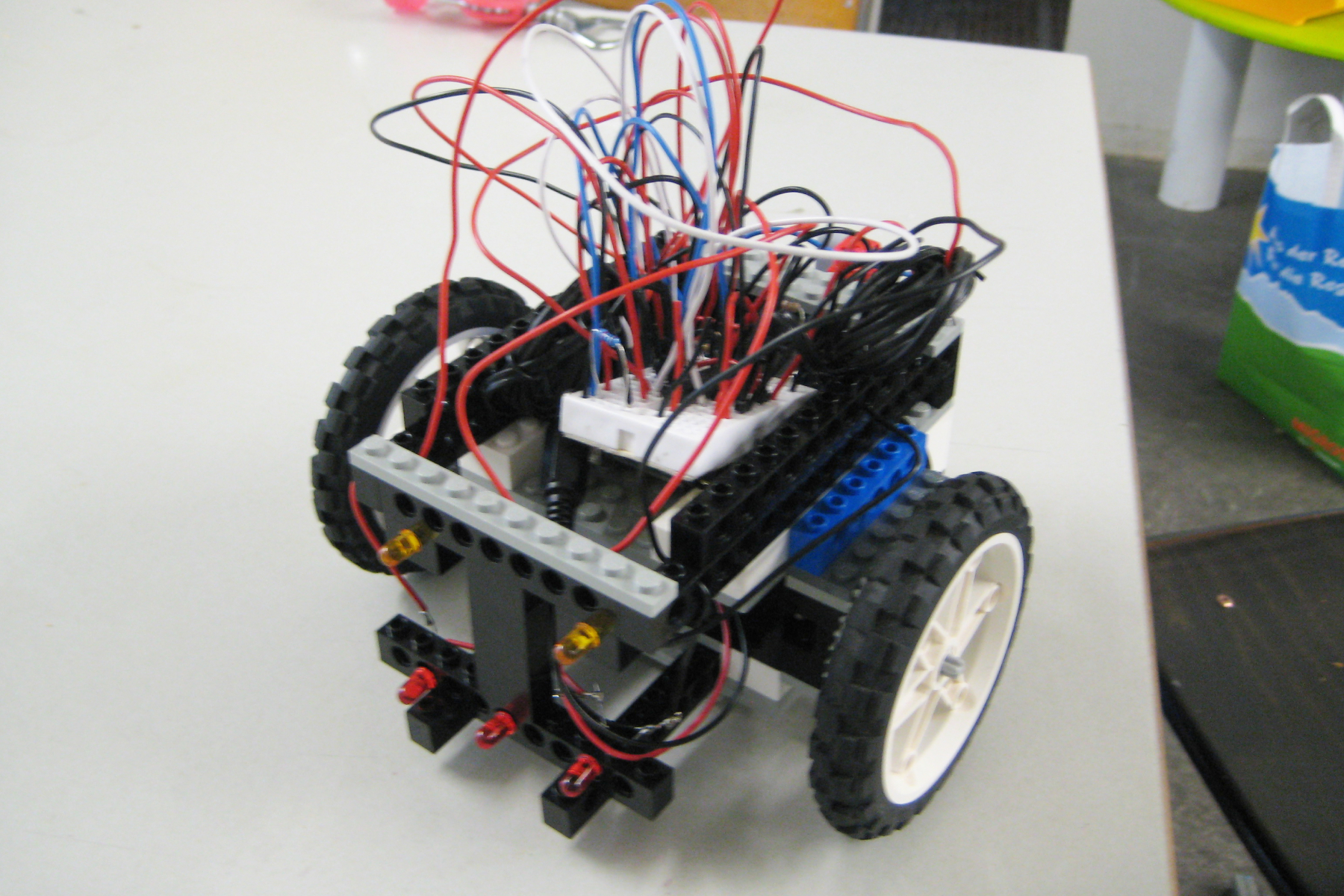
Quickly adaptable Lego chassis for testing stability and mobility, on which the required electronic components are installd.

Programming the interaction logic
NFC reader reads the chips in the floor maps and controls the direction of travel.

Give a face
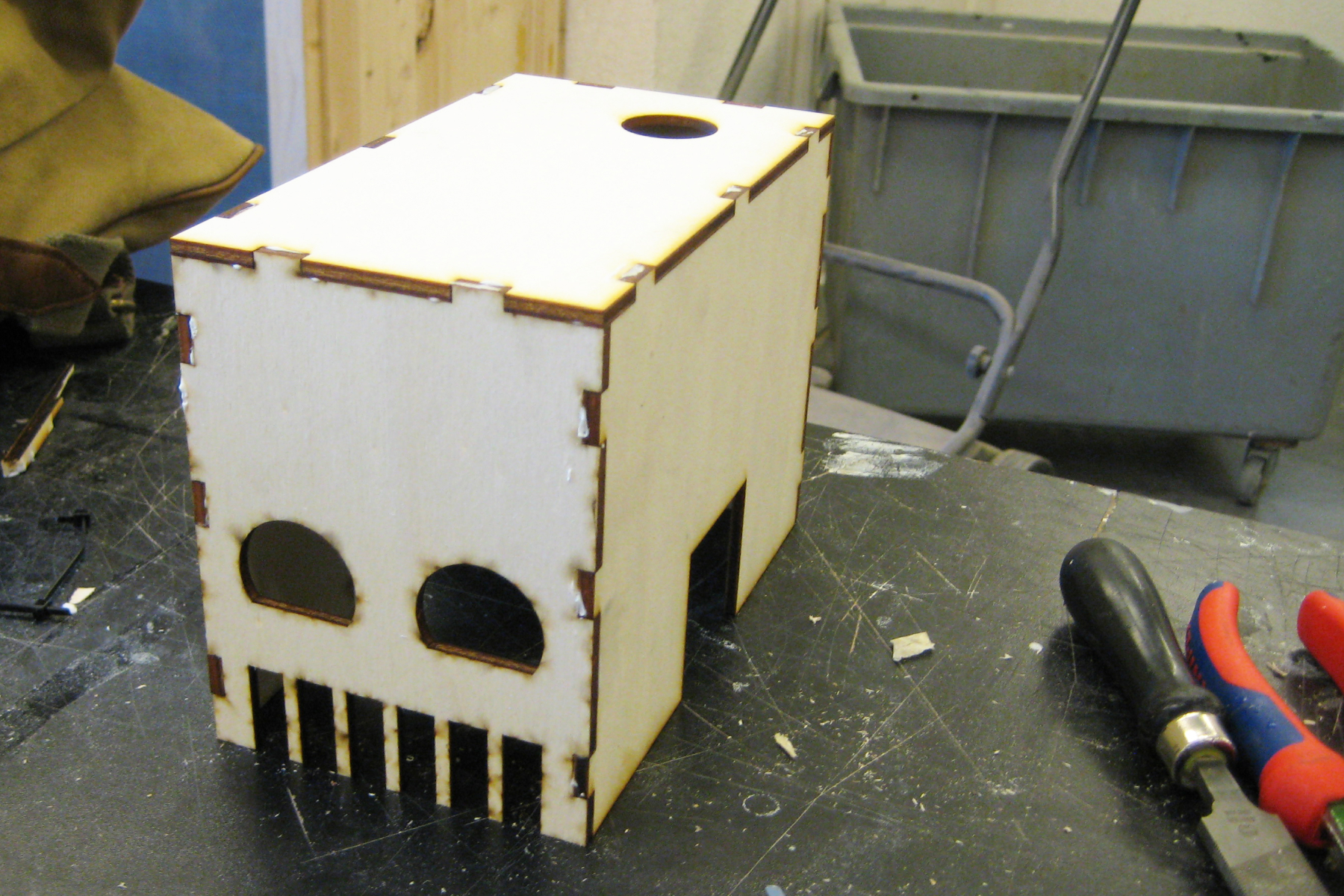
This makes the direction of travel of Rolle•E visible from the outside and creates additional empathy among users.
Directional cards
Make a signpost for Rolle•E
Floor cards with NFC chips have icons that make the effect on Role•E predictable.


User review
Convincing prototype with expandable potential
User tests show that the robot and the cards are understood intuitively and that the gameplay is immediately enjoyable for children and adults alike.
